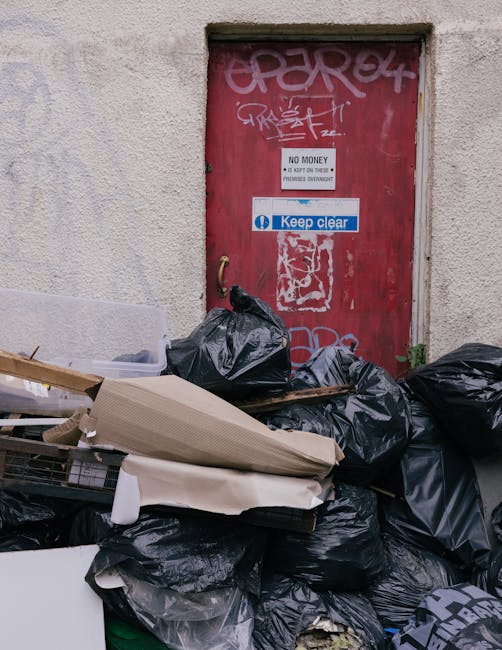
Restricted access jobs on Fulham Palace Road and rubbish solutions
Restricted access jobs on Fulham Palace Road can look straightforward from the pavement and then turn into a bit of a puzzle once you actually get on site. Narrow entrances, basement stairs, shared hallways, parked cars, timed loading bays, awkward refuse storage, and buildings with no lift can all change how rubbish is collected and removed. If you are dealing with a flat clearance, a shop refit, office waste, or a one-off bulky waste job, the method matters just as much as the waste itself.
This guide breaks down how restricted access rubbish solutions work in practice, why they matter, what to prepare, and how to avoid the usual headaches. You will also find a comparison of options, a realistic checklist, and a few useful pointers from the kind of jobs that tend to go smoother when the planning is done properly. To be fair, that planning is often the difference between a tidy, stress-free clearance and one long day of avoidable faff.
Table of Contents
- Why restricted access jobs on Fulham Palace Road and rubbish solutions matter
- How restricted access jobs on Fulham Palace Road and rubbish solutions works
- Key benefits and practical advantages
- Who this is for and when it makes sense
- Step-by-step guidance
- Expert tips for better results
- Common mistakes to avoid
- Tools, resources and recommendations
- Law, compliance, standards, or best practice
- Options, methods, and comparison table
- Case study or real-world example
- Practical checklist
- Conclusion
- Frequently asked questions
Why restricted access jobs on Fulham Palace Road and rubbish solutions matter
Fulham Palace Road is the kind of London route where access can change from one property to the next. One building has a front entrance set back from the road, another has a tight side passage, and the next has a shared staircase that barely gives you room to turn a chair. None of that is unusual. It is just London.
That matters because rubbish removal is not simply about lifting things and taking them away. On restricted access jobs, the route in and out, the load-out time, the vehicle position, and the waste type all influence how the job is planned. If those details are ignored, you end up with delays, extra lifting, blocked corridors, or waste left in the wrong place. Nobody wants that, especially if tenants, neighbours, customers, or building managers are already involved.
Restricted access jobs also tend to involve more than one concern at once. You might be clearing old office furniture while keeping the building open. Or removing builders' waste without upsetting residents. Or emptying a flat where the only usable access is up a narrow stairwell. In those cases, the rubbish solution has to fit the site, not the other way round.
There is also the practical side: time, safety, and cost. The less predictable the access, the more important it becomes to have a clear plan. A small mistake at the start can turn into a lot of carrying later. And, let's face it, stairs and bulky items are not a lovely combination on a wet London afternoon.
How restricted access jobs on Fulham Palace Road and rubbish solutions works
A good restricted-access rubbish removal job starts before anyone arrives with a van. First, the site is assessed. That may be done from photos, a call, a site visit, or a mix of all three. The key question is simple: how do we get the waste from where it is sitting to the vehicle safely and efficiently?
From there, the job is usually shaped around five things:
- Access route: stairs, lifts, narrow corridors, basements, rear alleyways, or shared entrances.
- Waste type: furniture, renovation rubble, office equipment, household rubbish, garden waste, or mixed loads.
- Volume: one bulky item, a few rooms of clearance, or a larger strip-out.
- Timing: school runs, delivery windows, resident access, or business opening hours.
- Handling needs: heavy lifting, dismantling, bagging, sorting, or protective floor covering.
In many cases, the best solution is not "more people" or "a bigger van" in isolation. It is matching the team, equipment, and arrival timing to the property. For example, a flat clearance in a converted Victorian building may need careful dismantling and staged loading. A shop clearance may need early-morning access so the pavement is clear before customers arrive. A building project may require waste to be removed in batches so the site stays workable.
Good rubbish solutions on restricted access jobs also consider separation and recycling. If materials can be sorted on site, the removal is often cleaner and easier to manage. That said, it has to be practical. Nobody should spend half a day sorting tiny fragments if the real issue is getting a sofa down a narrow staircase without damaging the wall.
If you need broader support for mixed household or business waste, it can help to look at the wider waste removal service and match it to the site's access conditions. For more complex property clearances, services such as flat clearance, house clearance, or office clearance are often more suitable than a simple ad hoc collection.
Key benefits and practical advantages
The best restricted access rubbish solution does more than move waste. It reduces friction across the whole job. That sounds obvious, but once you are on a cramped site with a tight deadline, the difference becomes very real.
1. Less disruption to the property
When access is planned well, there is less bumping into walls, fewer repeated trips, and a lower chance of scuffs or damage. This matters in rental properties, offices, managed buildings, and anywhere a landlord or facilities team will inspect the space afterwards.
2. Better safety for everyone involved
Restricted access often means awkward lifting angles, blind corners, or shared stairwells. A proper rubbish plan helps protect the people doing the lifting, but it also keeps residents, staff, and visitors safer. It is much easier to control a route when you know the route, after all.
3. Faster clearance on the day
Planning access in advance means fewer surprises. A vehicle can be positioned properly. Bags can be staged. Larger items can be broken down before removal begins. That usually saves time and keeps the whole job calmer.
4. Better waste sorting and recycling opportunities
When rubbish is handled in a structured way, it is easier to separate reusable items, recyclable materials, and true disposal waste. For mixed property jobs, this is where services like recycling and sustainability guidance become especially relevant.
5. More predictable pricing
Clear access details make quotes more reliable. If a team knows there are three flights of stairs, a 30-metre carry, or a timed loading restriction, they can price the job more accurately and avoid awkward surprises later. That transparency is good for everyone.
Expert summary: On restricted access jobs, the quality of the access plan matters almost as much as the waste removal itself. Good planning makes the job safer, quicker, and easier to price, and it usually leaves the property in better shape too.
Who this is for and when it makes sense
Restricted access rubbish solutions are useful for a wide range of people, not just businesses with awkward premises. In fact, some of the trickiest jobs happen in ordinary homes.
This approach makes sense if you are:
- a landlord clearing a flat with narrow stair access
- a homeowner dealing with a loft, cellar, or garage full of heavy items
- a tenant moving out of a top-floor property with no lift
- a builder needing waste removed from a tight front garden or side passage
- an office manager arranging a tidy, quiet clearance during working hours
- a shop or cafe owner with limited pavement space for loading
- an estate or block manager trying to keep communal areas clear
It also makes sense if the rubbish itself is not especially large, but the access is awkward. A single sofa can be more difficult than a whole pile of lighter bags if there is a tight corner halfway down the stairs. Strange but true.
If you are dealing with a home that has built-up clutter rather than one-off waste, a more structured service such as home clearance may be the better fit. For contents that need full-room sorting, loft clearance or garage clearance can save a lot of back and forth.
Step-by-step guidance
If you want a smooth restricted access job on Fulham Palace Road, this is the sequence that tends to work best in real life. Not glamorous, just effective.
- Describe the access in plain English. Mention stairs, lifts, parking, loading restrictions, gates, coded doors, rear entrances, and any fragile areas. A photo usually helps more than a long description.
- List the waste clearly. Separate bulky furniture, general rubbish, builder's waste, electrical items, and anything that may need special handling. If there is a mix, say so.
- Flag the awkward parts early. Tight stair turns, basement steps, no nearby parking, or time limits can change the plan. The earlier they are known, the better.
- Decide what needs dismantling. A wardrobe, bed frame, desk, or shelving unit may fit much more easily once broken down. Sometimes the right tool is a screwdriver; sometimes it is simply common sense.
- Choose the right service type. A flat, house, office, builder's waste, or furniture-specific job may fit better than a one-size-fits-all collection.
- Confirm the arrival window. On busy roads, timing matters. If the truck arrives during the wrong window, a job that should have taken an hour can drag on.
- Prepare the route. Move small items out of the way, unlock access doors, and make sure someone can answer questions quickly on site.
- Allow for a final sweep. Once the waste is out, the area should be checked for leftover screws, dust, packaging, or hidden bits behind furniture.
A small real-world example: a first-floor flat on a busy stretch of Fulham Palace Road might look simple on paper. But if the sofa is oversized, the stairwell is tight, and parking is limited, the job becomes all about sequencing. Remove smaller items first, clear the landing, then move the sofa with the right number of people and a short, controlled route. That is the difference between "done" and "nearly a disaster."
Expert tips for better results
There are a few habits that consistently improve restricted access rubbish jobs. None are complicated, but they save time and reduce stress.
Use photos instead of vague descriptions
Photos show stair width, ceiling height, railings, and where the problems really are. A quick image of the hallway often says more than five messages. Honestly, it is one of the simplest ways to avoid misunderstanding.
Measure the item before the job day
If a sofa, wardrobe, appliance, or desk is even slightly oversized, measure it. Not roughly. Properly. A few centimetres can make the difference between a smooth carry and a lot of muttering on the landing.
Check what can be dismantled safely
Some items are easier to remove in pieces, but not every item should be taken apart. Fragile furniture, fitted units, and awkward electrical items can create more mess if handled carelessly. Use judgement.
Stage waste near the exit if possible
If the building allows it, move items to a safe staging point before the team arrives. That shortens the carry and keeps hallways clear. Just avoid blocking fire exits or shared access routes.
Plan around neighbours and neighbours' patience
Restricted access jobs often take place in places where sound travels. Early morning loading, repeated door opening, or dragging heavy items can be annoying. A bit of courtesy goes a long way, especially in communal blocks.
Keep a spare bag or box for loose debris
This sounds minor, but loose screws, small plaster offcuts, and packaging can slow things down. Having one extra bag ready helps keep the job neat.
For businesses, it is worth checking whether the site would be better served by a more scheduled business waste removal arrangement rather than a one-off collection. That is especially true if waste builds up regularly and access is tight.
Common mistakes to avoid
Restricted access jobs often go wrong for very ordinary reasons. No drama. Just poor prep.
- Underestimating the access route. A job can look easy from the street and still be a pain once inside.
- Forgetting parking and loading restrictions. If the vehicle cannot stop close enough, the carry distance becomes a big deal.
- Assuming everything will fit through the door. It is surprising how often this happens with beds, sofas, and large desks.
- Mixing waste types without saying so. Builders' rubble, furniture, and general rubbish may need different handling.
- Leaving access details until the day. That can create delays, especially where entry codes, keys, or site permissions are needed.
- Not checking lift availability. A broken or undersized lift changes the whole plan.
- Overfilling bags or boxes. Heavy loads become awkward fast, particularly on stairs.
One of the more common surprises is the "second problem" on site. You arrive for a straightforward clearance and then discover a locked rear gate, a narrow hallway with no turning room, or a cupboard full of stuff nobody mentioned. It happens. Better to expect a little friction than to pretend it will all be effortless.
Tools, resources and recommendations
You do not need a van full of specialist kit for every restricted access job, but the right tools can make a huge difference.
- Dolly or sack truck: useful for safer movement on smoother surfaces where turning space allows.
- Heavy-duty gloves: practical for grip, splinters, and rough materials.
- Protective floor coverings: helpful in hallways, stairs, and managed buildings.
- Straps and blankets: reduce movement and protect furniture edges during carrying.
- Torches or good lighting: useful in basements, lofts, and side passages where daylight is poor.
- Basic tools for dismantling: screwdriver, Allen keys, and a small multi-tool can be enough for many domestic items.
For property-specific clearances, these service pages may help you narrow the job down more sensibly: furniture clearance, furniture disposal, builders waste clearance, and loft clearance. If the space is a commercial unit, office clearance may be the most efficient route.
If you are comparing providers or trying to understand how pricing is structured, the page on pricing and quotes is a sensible place to start. And if you want to know more about the company itself before moving ahead, about us offers useful background.
Law, compliance, standards, or best practice
Restricted access waste removal is not just a logistics problem. There are also safety and compliance expectations to think about. The exact rules vary depending on the property, the waste type, and the local setting, so it is wise to be careful rather than casual.
In practice, the main best-practice points are:
- Keep access routes safe and clear. Do not block fire exits, shared hallways, or emergency routes.
- Handle waste appropriately. Mixed waste should be assessed so it is not moved or disposed of in a careless way.
- Use sensible manual handling methods. Heavy or awkward items should not be rushed down stairs.
- Respect building rules. Many managed blocks, offices, and commercial units have loading, noise, or lift-use requirements.
- Check insurance and safety arrangements. Good operators should be able to explain how they approach site safety.
For readers who want more reassurance on these points, the site's health and safety policy and insurance and safety information are useful references. If you are arranging a clearance for a business or managed premises, these details matter more than people sometimes expect.
There is also a practical trust angle here. Responsible rubbish removal should not rely on guesswork. It should be planned, documented where needed, and carried out with care for the building and the people in it. That is good practice, plain and simple.
Options, methods, and comparison table
Not every restricted access job needs the same solution. Here is a simple comparison of common approaches.
| Method | Best for | Strengths | Limitations |
|---|---|---|---|
| One-off bulky waste collection | A few items or a small mixed load | Quick, simple, useful for clear access routes | Less efficient if the site has lots of stairs or a large volume of waste |
| Flat or house clearance | Contents of a property with awkward access | Good for larger domestic clear-outs and staged removal | Needs clear access information and careful planning |
| Furniture-focused removal | Sofas, wardrobes, tables, beds, desks | Ideal where bulky items are the main issue | Not always enough for mixed rubbish and renovation waste |
| Builders' waste clearance | Renovation debris, rubble, packaging, offcuts | Useful for active sites and phased waste collection | Can be heavy, dusty, and access-sensitive |
| Scheduled business waste removal | Regular commercial waste in a restricted site | Predictable, tidy, and easier to manage over time | May be more than you need for a one-off job |
The best choice usually depends on volume, access, timing, and how mixed the waste is. If you are unsure, start with the access problem first and the waste type second. That order tends to produce better answers.
Case study or real-world example
Here is a realistic example from the kind of job that tends to appear on Fulham Palace Road. A first-floor flat needed a partial clearance after a tenant move-out. The building had a narrow entrance, a tight staircase with a sharp turn, and no lift. The main items were a bed frame, a mattress, a wardrobe, several bags of mixed rubbish, and a small chest of drawers.
On paper, that looks manageable. On site, the awkward corner on the stairs changed everything. The wardrobe could not be removed in one piece, so it was dismantled in the flat. The mattress was carried separately, and the smaller bags were moved first to clear the landing. A neighbour's pram in the hallway meant the timing also had to be adjusted slightly. Nothing dramatic, just the usual London dance around shared space.
What made it work was the preparation. Photos were shared before arrival. The access route was described honestly. The items were grouped by size. Once the job started, the team could work steadily instead of improvising at every turn. The result was a cleaner flat, fewer risks, and no unnecessary damage to the stairwell.
That kind of outcome is common when the access issue is taken seriously from the beginning. It does not have to be complicated. It just has to be thought through.
Practical checklist
Use this checklist before arranging restricted access rubbish removal on Fulham Palace Road.
- Confirm the exact address and entrance used for access.
- Take clear photos of the route, stairs, and waste items.
- Measure any bulky furniture or awkward objects.
- Check for lifts, loading restrictions, parking limits, and entry codes.
- Separate waste into rough categories if possible.
- Decide whether anything must be dismantled.
- Make sure someone can grant access on the day.
- Keep hallways, exits, and shared areas clear.
- Ask how the waste will be handled, sorted, or recycled.
- Review pricing, timing, and any likely access complications in advance.
If your job is tied to a particular property type, you may also want to review the relevant service pages for a better fit, whether that is flat clearance, house clearance, or office clearance. Small details, yes, but they save time later.
Conclusion
Restricted access jobs on Fulham Palace Road are rarely about brute force. They are about planning the route, understanding the building, and matching the rubbish solution to the access conditions. Once you do that properly, the whole job becomes more manageable, safer, and far less stressful.
Whether you are clearing a flat, shifting office waste, dealing with builders' debris, or removing bulky household items, the real win is a process that works with the property rather than fighting it. That is what saves time. That is what protects the building. And, honestly, that is what keeps everyone in a better mood on the day.
Get a free quote today and see how much you can save.
When the access is tight and the job matters, a calm, well-planned clearance can make the whole street feel a little less heavy. And that is no small thing.
Frequently Asked Questions
What counts as a restricted access job on Fulham Palace Road?
Any rubbish removal or clearance job where access is awkward, limited, or heavily constrained can count as restricted access. That includes narrow staircases, basements, shared entrances, no lift, limited parking, or timed loading windows.
Can bulky furniture be removed from a flat with no lift?
Often yes, but it depends on the item size, stair layout, and the route out of the building. Larger items may need dismantling before they can be moved safely.
Is it better to send photos before the job?
Yes. Photos usually give a much clearer picture than a written description alone. They help with pricing, planning, and deciding what equipment or team size is needed.
How do rubbish solutions change when access is very tight?
The solution usually shifts toward smaller load planning, dismantling, careful staging, and smarter timing. The aim is to reduce carrying distance and avoid damaging walls, floors, or shared spaces.
What kind of waste is hardest to remove in restricted access areas?
Large furniture, mixed builders' waste, and heavy items like cupboards or appliances are often the most awkward. Loose bagged waste is usually easier, but it still needs a sensible route.
Do restricted access jobs cost more?
They can, because the job may take longer or need more careful handling. Pricing usually depends on access, volume, waste type, and whether dismantling or extra labour is required.
Should I clear the route before the team arrives?
Yes, if you can do so safely. Removing small obstacles, unlocking doors, and keeping corridors clear makes the job smoother and reduces the chance of delays.
Can you combine furniture, household rubbish, and builders' waste in one job?
Sometimes yes, but it depends on the mix and the site conditions. Mixed loads need a clear description so they can be handled properly and priced accurately.
What should I check about safety before booking?
Ask how the waste will be lifted, whether insurance and safety arrangements are in place, and whether there are any building-specific rules that need to be followed. A careful operator should be able to explain the process clearly.
Is this service useful for offices and shops too?
Absolutely. Offices, shops, cafes, and other commercial premises often have awkward access points, timed loading restrictions, or shared entrances that need a more considered approach. In those cases, business waste removal can be the better fit.
What if I am not sure which service page applies to my job?
Start with the property type and the waste type. For example, flat, house, office, or builders' waste each points to a slightly different solution. If you are still unsure, a broad waste removal enquiry is usually the easiest first step.
How can I make the job easier without doing too much myself?
Share photos, measure the biggest items, mention access restrictions early, and keep the route open. That is usually enough to make a noticeable difference without turning the day into a DIY project.
Where can I find more information about pricing and service expectations?
The most useful place to start is the page on pricing and quotes, along with the company information on about us. Those pages help set sensible expectations before you book.